Link label

How to Read Kratom COA: Complete Step-by-Step Guide
A kratom COA, or Certificate of Analysis, is a laboratory document that provides information about a product’s testing and composition. If you are learning how to read kratom COA reports, understanding the laboratory, batch information, alkaloid profile, and contaminant testing sections can help you interpret the information more effectively. A COA may include results for compounds such as mitragynine and 7-hydroxymitragynine, along with testing for heavy metals, microorganisms, pesticides, and other contaminants.
In this article
What Is a Kratom Certificate of Analysis?
How to Read a Kratom COA
Review Contaminant Testing
Understand LOD, LOQ, and Testing Methods
How to Tell If a Kratom COA Is Legitimate
Green Maeng Da Kratom at Canuck Kratom
What Is a Kratom Certificate of Analysis?
A Certificate of Analysis is a laboratory report associated with a particular sample or batch. A kratom lab report can show what was tested, which analytical methods were used, and whether the results meet the laboratory's stated specification limits or acceptable limits.
Why Does a Kratom COA Matter?
Third-party laboratory testing provides an additional layer of product information. An independent laboratory can analyze a sample without being the seller's own internal testing department. When reviewing a COA, look for the laboratory name, testing date, sample identification, lot number or batch number, and the specific tests performed.
How to Read a Kratom COA
Reading a kratom COA becomes easier when you work through the document section by section.
1. Check the Product and Batch Information
Start with the product name and sample name. Confirm that they correspond to the product you are researching. The lot number, batch number, sample identification, and COA date are also important because laboratory results apply to the sample that was tested.
A report that does not clearly identify the tested sample can be more difficult to verify. For COA verification, the batch information should make sense in relation to the product being sold.
2. Identify the Testing Laboratory
Look for the laboratory name and information about its qualifications. Some laboratories may provide accreditation information, such as ISO/IEC 17025, which relates to laboratory competence and testing systems.
The presence of laboratory information does not by itself guarantee product quality, so review the actual testing results and methods as well.
3. Understand the Kratom Alkaloid Profile
One of the most important sections may be the kratom alkaloid profile. Alkaloid testing can report compounds such as mitragynine, 7-hydroxymitragynine, speciociliatine, paynantheine, and speciogynine.
What Does Mitragynine Percentage Mean?
Mitragynine may be reported as a percentage concentration or in units such as mg/g. These are different ways of expressing concentration, so always check the units before comparing results between reports.
For example, a COA may list an alkaloid result in mg/g rather than percentage. The numerical value should therefore be interpreted together with the unit and testing method.
What Does 7-Hydroxymitragynine Mean on a COA?
7-hydroxymitragynine is another alkaloid that may appear in an analytical testing report. Its result should be read according to the unit, detection limits, and laboratory methodology stated on the document rather than interpreted from the number alone.
Review Contaminant Testing
A quality-focused COA may include testing beyond alkaloid concentration. Contaminant testing can provide information about substances that should not be present above specified limits.
Heavy Metals
Heavy-metal testing may include lead, arsenic, cadmium, and mercury. Check whether the report provides an actual result and whether that result is compared with a stated specification limit or acceptable limit.
Microbiological Testing
Microbiological testing can examine microorganisms such as bacteria, yeast, and mold. Depending on the testing panel, a report may also include organisms such as E. coli and Salmonella and provide microbial limits or pass/fail results.
Pesticides, Residual Solvents, and Adulterants
Some laboratory panels may also test for pesticides, residual solvents, adulterants, and other contaminants. The exact panel varies between laboratories, so do not assume that every COA covers every possible contaminant.
Understand LOD, LOQ, and Testing Methods
A kratom COA may include a limit of detection (LOD) and limit of quantification (LOQ). These terms describe analytical sensitivity and help explain how small an amount a laboratory method can detect or reliably quantify.
The report may also identify analytical techniques such as HPLC or LC-MS. These methods can be used for laboratory analysis of compounds and alkaloids, but the method should always be considered alongside the reported results.
Look at Pass/Fail Results and Specifications
Some COAs present results alongside specification limits and use terms such as pass or fail. Instead of looking at a single number in isolation, compare the reported result with the corresponding limit and understand what the laboratory's notation means.
How to Tell If a Kratom COA Is Legitimate
When learning how to verify a kratom COA, look for consistent product identification, batch information, laboratory details, testing dates, analytical methods, units, and complete results. A useful COA should provide enough information to understand what was actually tested.
If a report is missing basic sample information, contains unexplained inconsistencies, or provides very limited testing details, additional verification may be appropriate.
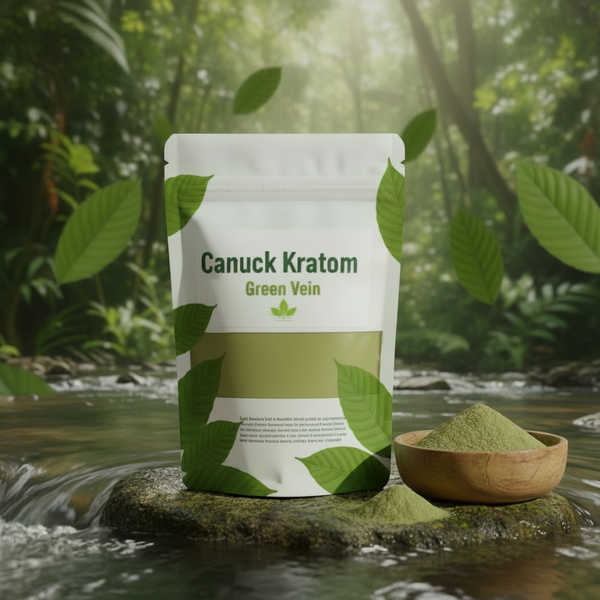
Green Maeng Da Kratom at Canuck Kratom
If you are comparing kratom products and reviewing available product information, Canuck Kratom offers Green Maeng Da Kratom as one of its products. Before purchasing any kratom product, review the available product information and applicable local requirements.

Explore our collections
Browse Canuck Kratom's full range, sourced direct and shipped across Canada.