
 Link label

Natural Mood Enhancing Supplements in Canada: A 2026 Buyer’s Guide
What if the most persuasive mood-support label tells you the least about what’s inside? For Canadians researching natural mood enhancing supplements Canada, botanical names and confident marketing can make products sound interchangeable, even when their evidence, product details and regulatory status differ. “Natural” doesn’t mean risk-free, and a product or strain name can’t guarantee its composition or effects.
Before choosing, compare what each listing actually tells you. This guide covers kava, kanna and kratom, explains why their product information and status may differ, and shows what to check on labels. Use the steps to review ingredients, product form, sourcing, storage and any available batch-testing documentation. For products represented as licensed natural health products, check for a Natural Product Number where applicable. The goal is an informed comparison based on verifiable details, not a promise of results.
Key Takeaways
- Compare kratom, kava and kanna by product form and available information, not by promises about mood effects.
- For natural mood enhancing supplements Canada shoppers are considering, separate evidence about a botanical from evidence about a particular product or batch.
- Use a practical label check: review the full description, note missing details and look for sourcing, processing, freshness and storage information.
- Ask whether batch-testing documentation is available, and check what it covers before treating a quality claim as verified.
- Build a shortlist around your product-form preferences and the transparency you can confirm, including details for listed kratom powders, kava products and Kanna Extract 20X.
What does “natural mood support” mean when comparing supplements in Canada?
“Natural mood support” is a broad shopping and marketing phrase. It may describe how a botanical product is positioned, but the wording alone doesn’t show that the product changes mood, works predictably or has been assessed as a treatment. That distinction matters when comparing natural mood enhancing supplements Canada shoppers may find online.
Botanical products and approved treatments aren’t interchangeable categories. A plant-based ingredient, a history of traditional use or a confident product description doesn’t establish that a product treats a condition. Nor does “natural” prove safety, quality or suitability for a particular person. Treat the wording as a prompt to check the details, not as a promise of an outcome.
What should Canadian shoppers expect from mood-support claims?
Read broad phrases such as “mood support” as descriptions of how a product is marketed, not as guaranteed results. Look for a clear explanation of the product form and ingredients. If a page refers to research, check what was studied: a botanical category, a particular preparation or the exact product being sold. Those aren’t automatically equivalent.
Traditional use can offer cultural context, but it isn’t the same as evidence for a current product. For example, this overview of the cultural and traditional use of kava provides background, not proof that a specific kava product will have a particular effect. This guide is for comparing product information, not for individualized health guidance.
Why do sourcing and product details matter?
A botanical or strain name tells you what a product is called, not necessarily its chemical composition. Origin, harvesting, drying, processing, storage and available testing information can help you judge how much you know about the product. Ask whether testing documentation is available for the specific batch and what it covers. Don’t assume testing has been done if the product page doesn’t say so.
Quality claims also need context. A description of a category isn’t proof of the sourcing or testing of every product within it. Batch variation may occur, so information about one batch shouldn’t automatically be applied to another. For products represented as licensed natural health products, check the label for a Natural Product Number and confirm which product it identifies. Treat missing or unclear information as a reason to ask questions before deciding.
Kratom, kava, and kanna: how do Canadian shoppers compare these botanicals?
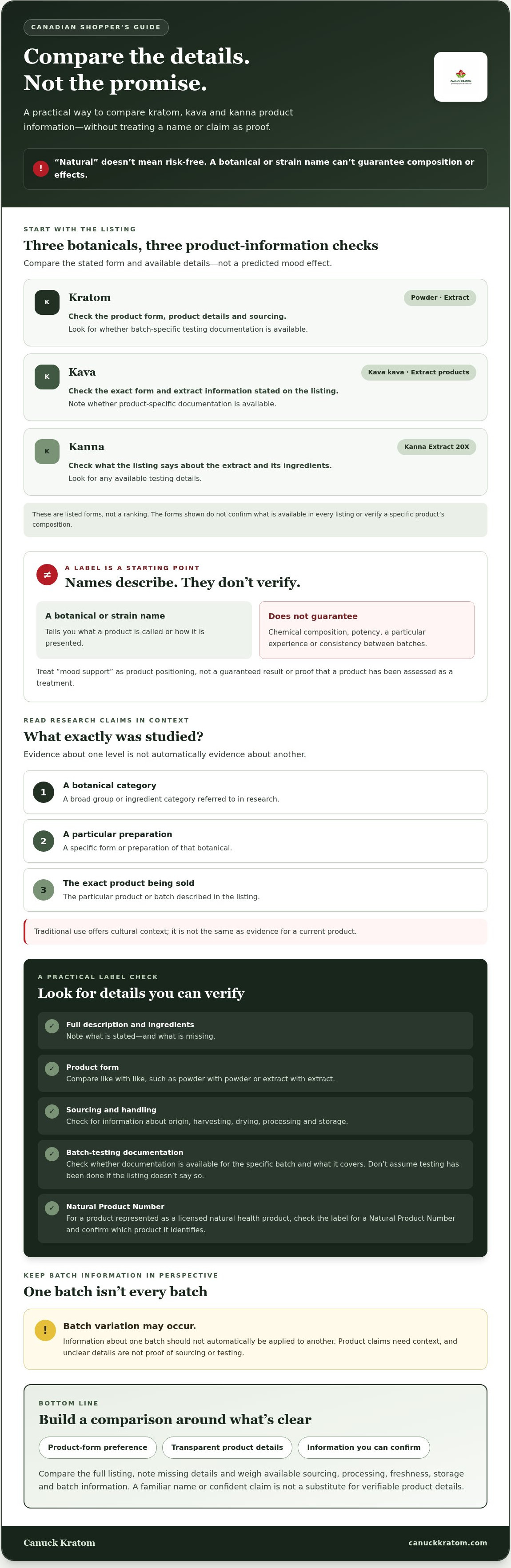
Compare the information attached to each product, not a predicted mood effect. The table below reflects product forms listed by Canuck Kratom. It doesn’t establish that every form is available in every listing or confirm a particular product’s composition. For broader category context, see this Canadian kratom powder buyer’s guide.
| Botanical | Listed forms | What to verify |
|---|---|---|
| Kratom | Powder and extract | Product form, product details, sourcing and whether batch-specific testing documentation is available. |
| Kava | Kava kava and extract products | The exact form and extract information stated on the product listing, plus any available product-specific documentation. |
| Kanna | Kanna Extract 20X | What the listing says about the extract, its ingredients and any available testing details. |
These are comparison points, not a ranking. A familiar botanical name or an extract label doesn’t guarantee a particular experience, potency or chemical profile. Check the full listing and ask about details that aren’t provided but matter to your decision.
How should you compare kratom products and strain labels?
Start with the form. Kratom powder and kratom extract are different product categories, so compare like with like. Strain names, including vein-colour labels, identify how a product is presented; they don’t confirm its composition or guarantee consistency between batches. Look for a clear product profile and any batch-specific information instead of treating the label as proof. This Maeng Da kratom buyer’s guide offers additional context on reading strain labels.
What product information can you compare for kava and kanna?
For kava and Kanna Extract 20X, compare only details confirmed by the specific listing. Note the stated form and extract description, then look for ingredient details, sourcing information and available testing documentation. An extract name or ratio shouldn’t be read as proof of a mood effect or a guaranteed chemical profile. If a detail matters and isn’t clear, ask before ordering.
Canuck Kratom lists kratom powders, kava products and Kanna Extract 20X among its botanical offerings. You can review the listed botanical categories and apply the same comparison questions to each product.
Do natural mood supplements work, and what safety questions should you ask?
There’s no responsible blanket promise that a botanical will improve mood or produce a predictable result. Evidence can differ by ingredient, preparation, amount, product and batch. Research about a botanical category doesn’t automatically show that a specific item for sale has the same composition or has been studied in the same way. For anyone comparing natural mood enhancing supplements Canada offers, that distinction is key: a product description is not proof of an effect.
“Natural” alone establishes neither safety nor effectiveness. It doesn’t confirm a product’s identity, purity, consistency, evidence for a claimed outcome or suitability for someone’s health circumstances. Botanical products may also pose risks or interact with medicines. Don’t treat a plant-based label as a substitute for checking reliable information.
How can you assess evidence without confusing it with advertising?
Look for a specific, checkable research reference, then ask whether it applies to the product being sold. Does the source describe the same botanical, preparation and intended use? Does it explain limitations, such as whether the evidence is preliminary or relates to a different product? If those details are missing, the claim may be difficult to assess.
Traditional use provides historical context, but it doesn’t by itself establish a clinical outcome. Marketing phrases such as “supports mood” also aren’t the same as product-specific evidence. Keep these categories separate: traditional use, a seller’s description and research findings each answer different questions. Be wary of precise-sounding claims that don’t identify a source or explain what was studied.
What safety and Canadian product-status details need checking?
Check current Canadian product-status information through authoritative sources, such as Health Canada, before purchasing or using a botanical. Product status can differ by ingredient and product, so don’t assume rules or authorizations for one botanical apply to another. A seller’s listing is useful for product details, but it isn’t a substitute for current official information.
A Natural Product Number identifies a licensed natural health product in Canada. Check the product label and verify the number and product details in Health Canada’s current resources. Don’t assume a product has an NPN unless you can confirm it. An NPN is product-status information, not a guarantee of a particular personal result.
Before trying a botanical, ask a qualified health professional about possible interactions, health conditions and other personal factors. Bring the product name and ingredient information so they can consider the specific item rather than a broad category. If key product details are unclear, pause and seek clarification instead of relying on a general claim.
How can you assess a Canadian botanical supplement before buying?
Use a consistent process for every listing. First, identify the product form, such as a powder or extract. Next, read the full description, including the ingredient information and any stated product profile. Finally, note what’s missing. A familiar botanical name doesn’t fill gaps in a listing, and a detail that isn’t stated shouldn’t be assumed.
What should a transparent product listing tell you?
Look for a clear product name, form and ingredient information. Check whether sourcing, processing and storage details are specific enough to understand, and whether the information appears current. For kratom, details about processing can help explain how the material is handled after harvest, but a general statement shouldn’t be taken as proof of a particular batch’s characteristics.
Freshness claims are most useful when the retailer explains how products are stored or how inventory information is kept current. If the listing doesn’t explain what “fresh” means, ask. The same goes for sourcing claims: a country or region may offer context, but it doesn’t confirm the composition of the item you’ll receive.
Keep this checklist handy for natural mood enhancing supplements Canada listings: form, full ingredients, sourcing, processing, storage and freshness, batch-specific testing documentation, and current Canadian fulfilment information.
How can shoppers assess testing and fulfilment claims?
“Tested” is a starting point, not a full explanation. Ask whether documentation is specific to the product and batch, what was tested, and whether you can review the results. Contamination testing means checking for unwanted substances, such as microbial contaminants. Alkaloid testing refers to measuring or identifying alkaloids in kratom. These terms describe different testing aims. Don’t assume either has been done for a particular item unless the retailer confirms it.
Testing information is more useful when its scope is clear. A broad claim may not tell you which batch was tested or which substances were included. If those details matter to your decision, contact the retailer and ask directly rather than extending a claim to every batch.
For a Canadian online order, check the retailer’s current shipping and domestic fulfilment information, including whether it explains where orders are fulfilled from. Details can change, so confirm them on the current site before ordering.
To compare product descriptions using these checks, review Canuck Kratom’s listed botanical products and the information available for each item.
Which natural mood supplement option fits your shopping priorities?
There’s no single best choice based on a mood promise. Build a shortlist by asking what product form you’re considering and how much product-specific information the listing provides. For Canadians comparing natural mood enhancing supplements Canada retailers list, the useful question is not “Which one works best?” but “What can I verify about this product?”
When might each listed botanical category merit further research?
Use the product form and disclosed details to decide what deserves a closer look, not as a reason to expect a particular outcome:
- Kratom powders: Compare the powder listing’s full description, sourcing details and any batch-specific documentation. Don’t treat a strain name as confirmation of composition.
- Kava products: Check the form and extract description stated for the specific product, along with its ingredients and any available product information.
- Kanna Extract 20X: Review what the listing says about the extract and its ingredients. The product name alone doesn’t confirm a guaranteed chemical profile or effect.
These are listed Canuck Kratom categories, not recommendations for a condition, symptom or individual health situation. If an important detail is absent, note the question and seek clarification before deciding. If your question is about a personal health concern or possible interaction, consult a qualified health professional rather than relying on a product listing.
What can Canadian shoppers expect from Canuck Kratom?
Canuck Kratom is an online Canadian retailer serving customers across the country. Its listed botanical products include Green, Red and White Maeng Da kratom powders, kratom extract, kava products and Kanna Extract 20X. The retailer sells powders and extracts, not kratom capsules, and operates online rather than through physical retail locations. These details can help you decide whether its product range and shopping format suit your comparison.
Take two practical steps before ordering:
- Choose the product form you want to compare, then read the current listing for ingredients, sourcing and processing information.
- Write down unanswered questions about the product or batch, including whether testing documentation is available, and ask the retailer before you decide.
Review the current listings at Canuck Kratom’s online storefront and compare the information available for each product.
Make your next comparison with confidence
Choose information over promises. “Mood support” wording doesn’t guarantee an effect, and botanical names or extract labels can’t confirm a product’s composition. Compare kratom powders, kava products and kanna by their listed forms, ingredient details, sourcing information and any batch-specific testing documentation you can verify.
That’s a practical way to approach natural mood enhancing supplements Canada shoppers may find online: read the full listing, identify what’s missing and ask questions before deciding. Keep evidence about a botanical separate from evidence about the specific product, preparation or batch. For personal health questions or possible interactions, consult a qualified health professional.
Canuck Kratom offers botanical products through an online storefront for Canadian customers. Its product range includes kratom powders and extracts, kava products and Kanna Extract 20X. Product details on the current listing, rather than a broad category description, are the place to start your comparison.
Explore Canuck Kratom’s botanical products online to review current product information and compare the listed options.
Frequently Asked Questions
Do natural mood enhancing supplements work?
There’s no reliable blanket answer, and no botanical can be promised to improve mood or produce a predictable result. Evidence may relate to an ingredient category or a specific preparation, not the exact product or batch you’re considering. Treat marketing language as a claim to check, not proof. Look for relevant research, note its limitations, and ask whether it actually matches the product being sold.
What natural supplements are marketed for mood support in Canada?
Products containing botanicals such as kava, kanna and kratom may appear in shopping searches or marketing for mood support. That phrase is broad category language, not proof of an effect or an official product classification. Compare the listed form, ingredients and available product information. Check current Canadian product-status details through authoritative sources, and don’t assume products containing different botanicals share the same evidence or regulatory status.
Is kratom a natural mood supplement?
Kratom is a botanical product, but calling it a “natural mood supplement” doesn’t establish that it is an approved treatment or that it changes mood. Canuck Kratom lists kratom powder and kratom extract among its offerings. A strain name or product description can’t guarantee composition or effects. Review the specific listing and current Canadian product-status information before making a decision. Don’t rely on the word “natural” as evidence of suitability.
Can kava or kanna affect mood?
Don’t assume that kava or kanna will affect your mood in a particular way. A product may be marketed for mood support, but the wording doesn’t prove a predictable outcome for a specific person or product. Evidence can vary by botanical and preparation. Check what research a claim refers to, review the exact product details, and ask a qualified health professional about personal risks or possible interactions before considering use.
How can I check whether a botanical supplement is tested?
Look for testing documentation that identifies the product and, ideally, the batch, then check what the testing covers. “Tested” alone doesn’t say whether testing looked for unwanted contaminants, measured ingredients or addressed other quality questions. Ask the retailer whether documentation is available and request clarification on its scope. Don’t assume a claim applies to every product or batch if the listing doesn’t make that clear.
What is a Natural Product Number in Canada?
A Natural Product Number (NPN) is an eight-digit number carried by licensed natural health products in Canada. Check the product label and confirm the number and product identity using Health Canada’s current resources. An NPN applies to the specific licensed product, so don’t assume it covers other items from the same retailer or botanical category. Its presence also doesn’t promise a particular personal result.
Can natural supplements interact with medications?
Yes, botanical products may interact with medications, and “natural” doesn’t rule out risks. The possibility can depend on the product, its ingredients and your individual circumstances. Before using a botanical alongside medication, ask a qualified health professional to review the exact product information with you. Bring the label or product listing, and don’t change prescribed medication based on a supplement’s marketing claims.
Ready to compare products? Review Canuck Kratom’s botanical products and current product information.