
 Link label

Herbal Supplements in Canada: A Practical Buyer’s Guide
A search for herbal supplements for wellness Canada-wide can turn up powders, extracts and other botanical products. Broad labels such as “natural” or “premium” don’t tell you what’s inside, how it was processed or what testing information is available. Compare those details before you choose.
Botanical products aren’t automatically risk-free because they come from plants. Product formats and ingredient information can also differ, even when listings use similar language. A careful comparison starts with the specific product, not a general promise.
This guide explains how to compare product categories and what to look for in ingredient, sourcing, processing, freshness, storage and testing information. For products licensed as Natural Health Products in Canada, a Natural Product Number is an eight-digit number on the label. Canuck Kratom is a Canadian-owned online botanical retailer with domestic fulfilment and shipping across Canada. Use the information provided for each item to make an informed choice, without relying on promised effects.
Key Takeaways
- Compare an item’s ingredient, format and product profile as separate details, rather than as proof of a promised outcome.
- Review sourcing, processing and product-specific testing information to understand what a label does and doesn’t tell you.
- Use a practical checklist to compare freshness, storage and seller details when considering herbal supplements for wellness Canada-wide.
- Learn how kratom powders, kava, Kanna extract, Amanita Muscaria caps and root beet powder differ as product categories.
- Browse Canuck Kratom’s online botanical store, with shipping across Canada.
What herbal supplements for wellness in Canada can include
“Herbal product” is a broad description for a product made from a plant or plant-derived ingredient. The ingredient is separate from any health outcome a seller might claim. Don’t assume a product will have a particular effect because it is botanical.
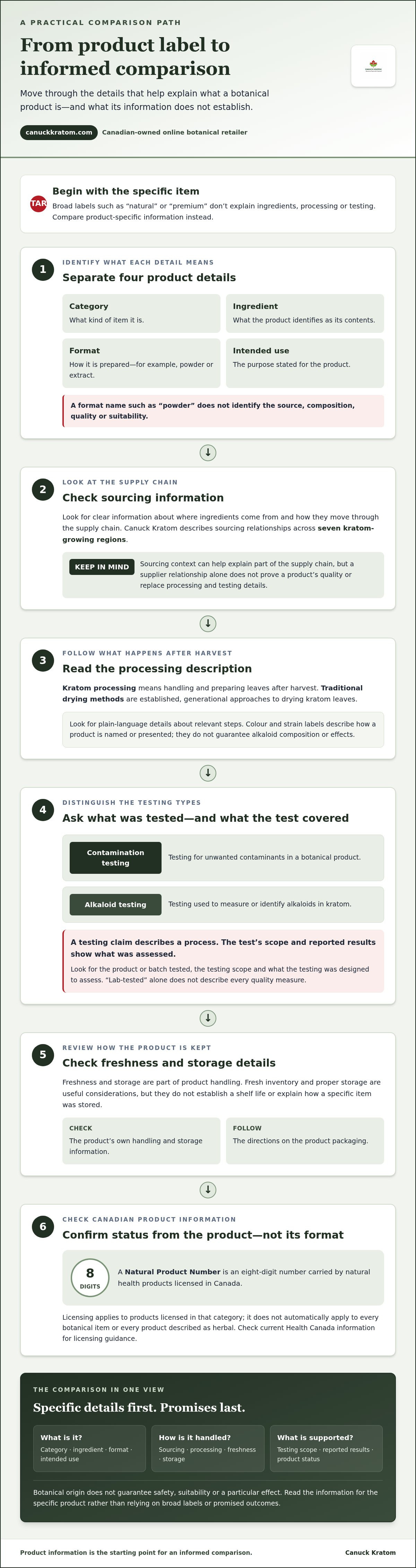
Separate four details when comparing products: category tells you what kind of item it is; ingredient identifies what it contains; format describes how it is prepared; and intended use is the purpose stated for it. Each answers a different question. “Powder,” for example, tells you the format, not the source, composition, quality or suitability.
Natural origin doesn’t guarantee safety, suitability or a particular effect. Ingredients, processing and product information can differ. Read the specific product details rather than treating “natural,” “herbal” or “wellness” as proof of what’s inside or what to expect. For Canadian shoppers comparing herbal supplements for wellness Canada-wide, product-specific information is a more useful starting point than a broad category label.
How botanical product categories differ
Powders, extracts and other formats aren’t interchangeable. Kratom powder, kava products, Kanna extract and root beet powder are distinct botanical offerings, not versions of one formula. An extract has a different format from a powder, and the plant ingredient differs too. Compare the ingredient and product profile for each item rather than assuming similar formats share the same composition or characteristics.
Format is only one part of the comparison. Check product-specific information for ingredients, preparation, stated purpose and any cautions provided. A category name can help narrow your search, but it can’t replace those details. A Herbal medicine overview offers broader context on herbal traditions and evidence; it doesn’t establish the licensing status or characteristics of a particular product.
Herbal products and Canadian product information
In Canada, Natural Health Product licensing applies to products licensed in that category. It doesn’t automatically apply to every botanical item or every product described as herbal. A Natural Product Number is an eight-digit number carried by licensed natural health products in Canada. Its presence is a detail about that specific product, not a claim that every botanical product has one. Check current Health Canada information for licensing guidance, and don’t infer a product’s status from its format or a retailer’s category label.
For any botanical item, keep the questions separate: What ingredient is identified? What format is it in? What information describes its product profile and intended use? What does the label say about its status and cautions? This framework helps you compare products without mistaking a plant-based ingredient for a guaranteed result.
How sourcing, processing, and testing information helps you compare herbs
Quality information is most useful when it describes what happened to a product, rather than simply offering reassurance. Sourcing details can help you understand where ingredients come from and how they move through the supply chain. Supplier relationships may support traceability, but a relationship alone doesn’t prove a product’s quality. Look for clear information about the specific product’s sourcing and handling.
Canuck Kratom describes sourcing relationships across seven kratom-growing regions and works with experienced farmers and suppliers. That context explains part of the supply chain, but it doesn’t replace information about a product’s processing or testing. When comparing herbal supplements for wellness Canada-wide, distinguish a sourcing statement from information about the finished product.
What to look for in sourcing and kratom processing
Kratom processing means handling and preparing leaves after harvest. Traditional drying methods are established, generational approaches to drying kratom leaves. Useful product information describes relevant steps in plain language without implying that a particular method guarantees a specific result.
Colour and strain labels can identify how a product is named or presented, but they don’t guarantee its alkaloid composition or effects. If a label uses technical-sounding terms, look for an explanation of what they describe. A name isn’t a substitute for product-specific information.
How to read testing and freshness information
Testing claims need context. Contamination testing means testing for unwanted contaminants in a botanical product. Alkaloid testing means testing used to measure or identify alkaloids in kratom. These are different types of testing. Neither term alone tells you which product or batch was tested, what the test covered or what its results showed.
A testing claim describes a process; the test’s scope and reported results show what was assessed. Look for details about the product and the testing, including whether the information applies to an individual batch and what the testing was designed to assess. The phrase batch-tested quality control is more informative when accompanied by a clear description of the batch and testing scope. A general “lab-tested” statement alone doesn’t describe every quality measure.
Freshness and storage are also part of product handling. Fresh inventory and proper storage are useful considerations, but they don’t establish a shelf life or explain how a specific item was stored. Check the product’s own handling and storage information, and follow the directions on its packaging. Sourcing and testing details also don’t establish a product’s regulatory status or intended-use category.
Canuck Kratom describes its botanical products as carefully sourced, naturally processed and laboratory-tested. For a closer look at botanical product information, compare the details attached to each item rather than relying on a broad claim.
Compare herbal product categories by format and product profile
Category names can help you sort a catalogue, but they don’t tell the whole story. Compare the stated format, ingredient details and product-specific information side by side. A powder and an extract aren’t interchangeable, and products from different botanicals shouldn’t be assumed to share ingredients, testing or characteristics.
This table compares categories available through Canuck Kratom. Use the shopper considerations to guide what details to look for, not to infer a product’s composition or intended use.
| Category | Format | Product information to compare | Shopper considerations |
|---|---|---|---|
| Kratom | Powder | Ingredient, product profile, sourcing and any product-specific testing details | Green, Red and White Maeng Da are product labels, not guarantees of potency or composition. |
| Kratom | Extract | How the product is described and what its stated profile includes | Compare its own details with powder; don’t assume a label or category predicts effects. |
| Kava | Product formats vary | The specific format and product information provided | Keep comparisons product-specific rather than applying one product’s details to another. |
| Kanna | Extract | Ingredient and extract-specific product information | Don’t treat the word “extract” as a complete description of the product. |
| Root beet | Powder | Ingredient details and information describing the powder | Assess it on its own terms, not as equivalent to botanical extracts. |
For herbal supplements for wellness Canada-wide, compare documented product details rather than assumed outcomes. Explore Canuck Kratom’s botanical products with those distinctions in mind.
Kratom powders and concentrated botanical extracts
Kratom powder and kratom extract differ first by format. Concentrated alkaloid products are formulated with alkaloids at higher concentrations than ordinary botanical leaf, but the category name alone doesn’t establish a specific product’s composition. Compare the product profile and available details without using strain labels to predict potency or effects. For more on powder formats and product information, see the kratom powder buyer’s guide.
Kava and other botanical product categories
Kava products form a distinct category, and their formats should be compared using the information supplied for each product. Kanna extract and root beet powder are different categories too; neither should be judged by assumptions drawn from kava or kratom. The botanical extracts quality guide offers more context for reading extract details.
Keep the comparison grounded: identify the category, check the format, then review the product’s own information. This makes differences easier to see without turning a name or label into a promise.
A practical checklist for Canadian herbal product shoppers
Start with the product page, not the boldest claim on a label. Use this checklist to distinguish documented details from descriptions and identify what the listing doesn’t explain. Apply the same questions across botanical categories, while remembering that testing and product details can differ from one item to another.
Questions to answer before choosing a product
Review each listing carefully. If a detail isn’t provided, don’t fill the gap with assumptions based on a product name, format or “natural” wording. Keep your notes specific to the item you’re comparing.
- 1. Identify the ingredient. Find the botanical or other ingredient named in the product information. Check whether the description explains what the product contains instead of relying on a broad category label.
- 2. Confirm the format. Note whether it’s a powder, extract or another form. Format describes how a product is presented; it doesn’t, on its own, tell you its full composition or characteristics.
- 3. Read the product profile. Look for a product-specific description, stated intended use and relevant information or cautions on the label. Separate those details from general statements about wellness.
- 4. Check who sells it. Review the seller information and details for the specific product. Don’t assume information about one item applies to every product in a catalogue.
- 5. Look for sourcing and processing details. Clear statements about where ingredients come from and how they’re handled help you understand the product’s documented background. Sourcing alone doesn’t prove finished-product quality.
- 6. Review testing and handling information. Check what testing is described and what it covers. Look for freshness and storage information that applies to the product, without assuming a shelf life that isn’t stated.
How to keep comparisons responsible
Keep product facts separate from marketing language and descriptions of traditional context. A strain name or colour label can identify how a product is presented, but it doesn’t guarantee alkaloid composition or outcomes. Likewise, “natural” isn’t proof that a product is risk-free or suitable for every shopper.
Compare the ingredient, format, product profile, seller, sourcing, processing, testing scope, freshness and storage. Treat anything beyond the documented details as unverified. This checklist works across botanical categories and keeps your decision grounded in information you can review. It also prevents broad wellness language from becoming a product promise.
For herbal supplements for wellness Canada shoppers are comparing, use the checklist to read product information, not to predict effects. Explore botanical products online and apply the same questions to each product profile.
Explore Canuck Kratom’s herbal and botanical products online
Canuck Kratom is a Canadian-owned, online-only botanical retailer serving shoppers across Canada. Its catalogue includes distinct categories that you can compare by ingredient, format and the information provided for each item. Don’t assume that every botanical product belongs to the same category.
A kratom powder, a kava product and a root beet powder have different product profiles. Read each item’s details on their own terms, without assuming that ingredients, processing or testing information apply across the catalogue. Product labels identify products; they aren’t promises of a particular outcome.
What shoppers can explore at Canuck Kratom
The kratom powder category includes Green, Red and White Maeng Da labels. Treat these as product identifiers, not guarantees of potency, alkaloid composition or effects. Review the information for the specific powder you’re considering, including its profile and product-specific testing details.
Kava and Kanna extract are separate botanical offerings, each with its own product profile. Their category names don’t make them interchangeable or explain every detail about a specific item. Check each product’s information for its format, ingredients and any stated cautions or testing details.
Amanita Muscaria caps are another distinct category. Root beet powder is separate again: it’s a powder product, not a type of kratom. Keeping these categories distinct makes it easier to compare like with like and avoid applying information for one product to another.
Sourcing relationships and Canadian online ordering
Canuck Kratom has more than 23 years of experience in the kratom industry, and its team has spent over eight years building relationships with local farmers. The company also describes sourcing relationships across seven kratom-growing regions. These are business details, not independent certifications or proof of every product’s characteristics. For specific sourcing, processing and testing information, refer to details about the individual product.
Domestic fulfilment and coast-to-coast shipping across Canada make online browsing and ordering available to Canadian customers nationwide. As you compare herbal supplements for wellness Canada shoppers may explore, check what each product is, read its product profile and avoid inferring effects from a botanical name. Natural origin alone doesn’t establish safety or suitability.
Ready to compare product categories and details? Browse Canuck Kratom’s botanical selection online.
Make your next botanical choice with confidence
Decide which product details matter to you, then use them to guide your browsing. Compare options carefully and choose based on the information available, not the strength of a promise. Clear expectations make for a more informed choice.
For Canadians exploring herbal supplements for wellness Canada-wide, botanical products aren’t interchangeable. Keep your comparison criteria in mind and choose when the product information gives you a clear basis for your decision.
Browse Canuck Kratom’s botanical products and compare the details for yourself. Explore the online selection at your own pace.
Frequently Asked Questions
What counts as an herbal supplement in Canada?
The phrase can describe a range of plant-based products, but a product’s marketing name may not tell you its full contents or Canadian status. Read the package for the ingredient name and compare it with the product title. If the wording differs, rely on the specific product information rather than assuming that a familiar herb name describes the entire formulation.
Are herbal products automatically safe because they’re natural?
No. A natural origin doesn’t mean a product is risk-free or suitable for every shopper. Read the package for warnings, restrictions and other cautions, and don’t treat words such as “natural” or “traditional” as a safety stamp. These terms describe how a product is presented, not a guarantee about how it will affect an individual.
How can I compare herbal products before buying?
Make a short side-by-side note for each option: product name, listed ingredients, format, seller and any cautions. Then mark which details are clear and which are missing. This helps you spot when two listings use similar language but provide different levels of information. For herbal supplements for wellness Canada shoppers are considering, a consistent comparison makes gaps easier to notice.
What does batch-tested quality control mean?
It means testing is part of quality control for individual batches, but the phrase alone doesn’t show whether the information relates to the batch being offered. If a test document is provided, check that its product identification and batch details match the item you’re reviewing. A report for another product or batch shouldn’t be treated as evidence about the one in your cart.
Does a Natural Product Number mean every herbal product is approved?
No. A Natural Product Number relates to a specific licensed product, not every botanical item from a retailer or brand. If you see a number, compare the product name and format on the label with the information for that exact item. Don’t assume a number shown for one product applies to another, even if both appear in the same category.
Are kratom strain names guarantees of potency or composition?
No. A shared strain label doesn’t establish that two products have identical composition. Listings with the same name may still have separate product descriptions or batch information. Compare the details attached to the specific item rather than treating its label as a measurement. The name can help identify the listing, but it can’t replace product-specific evidence.
How should herbal powders be stored?
Keep the original packaging and its storage directions with the product. This keeps the instructions tied to the specific powder rather than mixing them up with guidance for another botanical. Retaining the package also keeps its product identification and any batch details available for reference. Follow the directions on that item instead of applying a general rule to every powder.