
 Link label

Organic Beet Root Powder in Canada: A Clear Guide to Quality and Everyday Uses
What does a label tell you beyond the “superfood” promises on the front? If you’re comparing organic beet root powder Canada products, clear product details make it easier to choose. Benefit claims alone don’t explain what’s in the package, how products differ or what evidence supports the wording. A little label-reading know-how can make online shopping less like guesswork and help you focus on what matters to you.
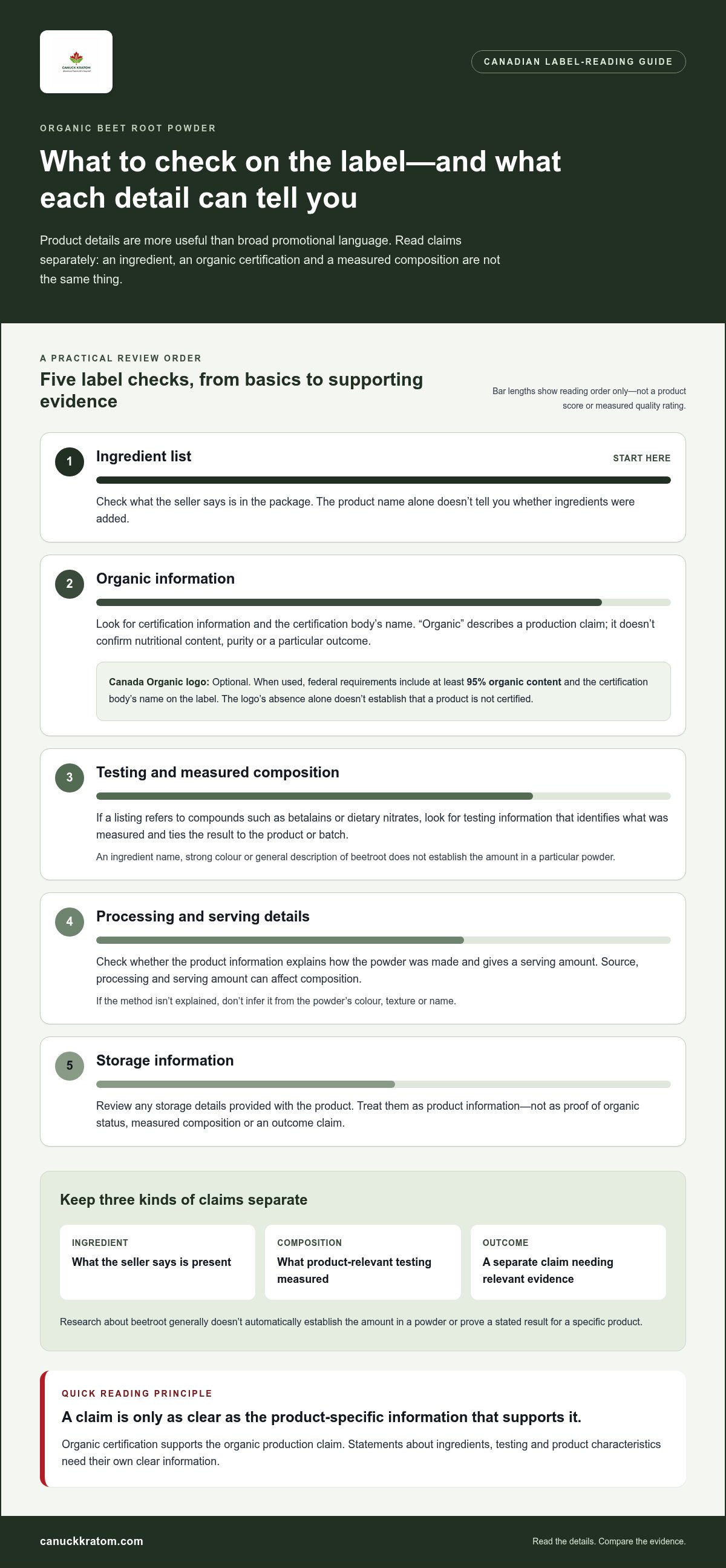
When comparing powders, start with the ingredient list, organic information and any details about processing, testing and storage. Those specifics are more useful than broad promotional language. This guide explains what beet root powder is, how to assess product claims, and how to try it in familiar foods and drinks. You’ll also find practical storage tips and a checklist for reviewing product information. Use it to compare options and decide whether beet root powder suits your kitchen.
Key Takeaways
- Understand how beetroot becomes a powder and why beetroot and beet root refer to the same vegetable.
- Learn why compounds associated with beetroot don’t confirm the amounts or effects of a particular product.
- Compare organic beet root powder Canada labels by checking ingredients, organic information, origin, processing and batch testing.
- Find simple ways to mix beet root powder into food and drinks, plus practical storage pointers.
- Use a quality checklist to shop with more confidence and explore Canuck Kratom’s root beet powder.
What Is Organic Beet Root Powder, and What Does Organic Mean in Canada?
Beet root powder is beetroot that has been prepared, dried and milled into a powder. “Beetroot” and “beet root” refer to the same vegetable, Beta vulgaris. That basic description doesn’t tell you how a particular product was processed, whether ingredients were added or what the finished powder contains. Check the ingredient list and product information for those details instead of inferring them from the name.
“Organic” describes a production claim. It doesn’t, on its own, guarantee a particular nutritional profile, purity or effect. For Canadian shoppers comparing organic beet root powder Canada products, treat these as separate questions. Organic status doesn’t establish whether a product was tested for other quality measures or how it will work in a recipe. Look for information that supports each claim separately.
Beetroot powder and fresh beets: what changes?
A fresh beet is a whole root with its natural moisture, shape and texture. Powder is dried and milled, making it convenient to measure into other ingredients. The amount of beetroot represented by a serving depends on the product’s preparation and serving size, so don’t assume that a serving of powder is nutritionally identical to fresh beets.
For general information about the vegetable, including its history and cultivation, see Beetroot on Wikipedia. Product-specific processing is different: unless a label or product description explains how the powder was made, don’t infer the drying method or other production details from its colour, texture or name.
How to read an organic claim on a Canadian product
In Canada, an organic claim must be supported by certification under the applicable Canadian organic requirements. Review the label for certification information and the name of the certification body. The Canada Organic logo is optional. When used, it is subject to federal requirements, including a minimum of 95% organic content and the name of the certification body on the label. The logo’s absence alone doesn’t establish that a product is not certified.
Canadian Organic Standards cover how organic products are produced and handled. They don’t certify nutritional content or promise a particular outcome. Keep the claims distinct: certification supports the organic production claim, while statements about ingredients, testing or product characteristics need their own clear information. If a listing uses “organic” without explaining certification, don’t treat the wording alone as proof. Review the label and product details to understand what the claim establishes.
What Beetroot Powder Contains, and What Benefit Claims Can Establish
Beetroot naturally contains compounds such as betalains and dietary nitrates. Betalains are pigments that contribute to the root’s colour, while dietary nitrates are compounds found in some foods. These terms describe parts of beetroot’s composition. They don’t tell you how much of either compound is in a particular powder or what consuming it will do.
An ingredient’s presence is not proof of a promised health effect. Keep that distinction in mind when a product description moves from naming a compound to suggesting a result. Those are different kinds of statements, and each needs evidence suited to what it claims.
Betalains, nitrates, and the beetroot product profile
Betalains are plant pigments, including the red and yellow compounds associated with beets. Dietary nitrates can be present in beetroot, but their quantity in a finished powder can’t be determined from the ingredient name alone. The beet’s source, processing and serving amount can all affect the composition of the product.
A general description of beetroot’s compounds isn’t a product analysis. To know whether a particular powder has measured levels, look for testing information that identifies what was measured and relates the result to that product or batch. Without that data, don’t infer a level from strong colour, a “high nitrate” phrase or a general description of beetroot as rich in a compound.
How to assess wellness language responsibly
Read product wording in layers. “Made with beetroot” identifies an ingredient. “Contains dietary nitrates” names a compound. A statement that a product improves stamina or supports a health outcome is an outcome claim, not simply an ingredient description. Research about beetroot as a food may offer general context, but it doesn’t automatically establish the amount in a powder or prove that a specific product produces a stated result.
Ask what evidence would support the exact wording. Is the claim about beetroot generally, a measured amount in the powder or an outcome after people use that particular product? These questions help separate background information from evidence tied to a product. Promotional phrases such as “performance support” may sound precise while leaving the proposed outcome and its evidence unclear.
- Ingredient statement: Tells you which ingredient the seller says is present.
- Measured composition: Should identify the compound and provide product-relevant testing information.
- Outcome wording: Makes a separate claim that needs evidence relevant to that outcome and product.
Natural origin alone doesn’t establish safety for every person or prove effectiveness. Treat wellness language as a prompt to examine the evidence, not as a substitute for it. When reviewing organic beet root powder Canada listings, keeping composition and outcomes separate makes product descriptions easier to assess without relying on promises.
How to Compare Organic Beet Root Powder Labels in Canada
Product pages can use similar words while offering very different levels of detail. Compare what each label actually tells you, not just the claims on the front. Use the table below to assess organic beet root powder Canada options without assuming that a polished description proves quality.
| What to compare | Useful details to look for | What not to assume |
|---|---|---|
| Ingredients | Whether beetroot is the sole ingredient or other ingredients are listed. | “Pure” or “single ingredient” unless the ingredient list supports it. |
| Organic details | Certification information and the name of the certification body, where applicable. | That an organic word or logo alone tells the full certification story. |
| Origin | A stated country or region for the beetroot or finished product. | That the seller or shipping location is where the beetroot was grown. |
| Processing | Clear information about preparation or drying, if provided. | That “raw,” “fine” or “premium” explains the full process. |
| Batch testing | The test scope, the batch it applies to and when testing took place. | That “tested” means every quality measure was checked. |
Which label details help shoppers compare products?
Start with the ingredient list. A powder listing beetroot alone differs from one that includes other ingredients, so read the full list rather than relying on the product title. Then review the organic information. Compare stated origin, processing and storage guidance side by side, but don’t treat missing details as proof of a problem or fill the gaps with assumptions.
Specific language is more useful than broad praise. “Premium” is subjective; it doesn’t tell you about the ingredient, source or production method. A stated origin or a clear explanation of processing gives you something concrete to compare. If a product page doesn’t identify these details, record them as unknown rather than guessing based on colour, texture or the seller’s location.
What testing and certification wording can, and cannot, tell you
A testing claim is meaningful only when its scope is clear. Look for what was tested, which batch the result relates to and the test date or report details. This is the difference between a general “tested” statement and useful batch-tested quality control. Testing can address different questions, so one test shouldn’t be taken as proof of every quality attribute.
For example, contamination testing looks for specified unwanted substances; it doesn’t automatically measure betalains or dietary nitrates. Nutrient or compound testing addresses composition, and the method and results matter. Alkaloid testing is terminology associated with certain other botanicals, not a substitute for beetroot-specific composition information. Rely on product information for details about the tests performed.
Use the same standard for certification and quality claims: look for identifiable, product-specific details. Certification relates to the stated production claim; it doesn’t establish testing results, freshness, composition or health effects. A side-by-side comparison can show which details are documented and which remain unclear, helping you make an informed choice.
How to Use Beet Root Powder in Food and Store It Well
Beet root powder is easy to try in familiar recipes. Start with a small amount, mix it thoroughly, then adjust to taste. The colour and earthy flavour can change how a dish looks and tastes, and their intensity varies by product and recipe. Follow the package’s serving directions if provided rather than treating a general recipe suggestion as a product-specific serving size.
Simple ways to add beetroot powder to food
Choose a smooth or moist food to help the powder blend in. Stir it into a smoothie or juice, or mix it into yoghurt. You can also add it to a sauce or baking recipe. For dough or batter, mix the powder with the dry ingredients first, then combine everything as the recipe directs. This helps distribute it evenly.
Try it in a small portion before adding it to a whole batch. Beetroot powder may tint foods, and its earthy flavour can be more noticeable in some recipes than others. Strongly flavoured ingredients may balance that taste, while a mild yoghurt or drink may let it come through more clearly. These are sensory considerations, not guarantees about a specific powder.
- Start small. Begin with less than you think you may want, and follow any serving directions on the package.
- Mix thoroughly. Stir or blend the powder into a small amount of liquid or food first, then combine it with the rest of the recipe.
- Adjust to taste. Try the prepared portion, then add more gradually if you like the colour and flavour.
For baking, remember that added powder can affect a recipe’s appearance and flavour. Avoid changing several ingredients at once so you can tell what you prefer. If you’re adapting a recipe for the first time, test a small portion rather than committing a full batch.
Keeping powdered beetroot fresh
Store the powder according to its package instructions and check the best-before information. Moisture, heat and light can affect dried ingredients, so follow the label’s directions about where and how to keep the package. Close it securely after use, and use a clean, dry utensil to avoid introducing moisture or food residue.
Storage needs and shelf life can vary by product. Follow the package directions rather than assuming every powder is the same. For Canadian shoppers comparing organic beet root powder Canada options, serving and storage instructions are useful product details, just like a readable ingredient list. Canuck Kratom offers root beet powder through its online store. Shop root beet powder online and follow the product information when using it.
Explore Organic Beet Root Powder for Canadian Online Shopping
A careful label check makes product comparison clearer. For organic beet root powder Canada shoppers, focus on details you can verify on the label or product page, and separate broad marketing language from documented product information. If a detail is missing, leave it unknown rather than guessing.
A final checklist before choosing
Use this short checklist as you review a product:
- Ingredient clarity: Read the full ingredient statement. Check whether it names beetroot alone or lists other ingredients, and note anything that is unclear.
- Organic information: Look for certification details and the certifier identified on the label, where applicable. An organic-sounding phrase isn’t a substitute for clear supporting information.
- Testing transparency: If testing is mentioned, check what was tested and whether the information applies to a particular product batch. A general testing statement doesn’t tell you the scope or result.
- Processing and storage: Look for product-specific preparation and storage directions. Follow the package instructions rather than assuming all beetroot powders are processed or stored alike.
- Wellness wording: Treat broad claims as a reason to look for relevant evidence, not as a promised result. Ingredient descriptions and outcome claims aren’t interchangeable.
These details help you compare listings on substance rather than adjectives. A phrase such as “premium” may sound reassuring, but it doesn’t explain ingredients, origin, processing or testing. Keep any detail that matters to you in view as you compare product information.
Find root beet powder from Canuck Kratom
Canuck Kratom is a Canadian-owned online botanical retailer serving customers across Canada. Root beet powder is part of its product selection, available through its online store. Use the product label and listing to review the specific details provided for ingredients, organic certification, origin, processing, testing and storage.
Informed online shopping doesn’t require decoding every promotional phrase. It means knowing which details are stated, which claims have clear support, and how those details fit your preferences. Use the checklist to compare products, then review Canuck Kratom’s root beet powder information before deciding.
Explore root beet powder through Canuck Kratom’s online storefront.
Choose with confidence and make it your own
Start by deciding which product details matter most to you, then compare the information provided. A clear ingredient statement, organic certification details, testing information and storage directions give you a more useful basis for a decision than broad praise or benefit promises. If a detail isn’t explained, leave it as an open question instead of assuming the answer.
Once you’ve chosen a powder, follow its label directions and try it in a familiar recipe to see whether its flavour and colour suit your preferences. Keep the package information handy so you can refer to its use and storage instructions.
For Canadians comparing organic beet root powder Canada options, informed shopping means matching product details to what you value without expecting a label to promise a particular outcome. Canuck Kratom offers root beet powder through its online store. Explore root beet powder online.
Frequently Asked Questions
Is beet root powder the same as beetroot powder?
Yes. “Beet root” and “beetroot” are alternative spellings for powder made from the same vegetable. The wording alone doesn’t tell you whether a product contains only beetroot or includes other ingredients, so check the ingredient list. Product names can vary between sellers, but the full label is more useful for comparing contents than spelling or listing titles.
Can organic beet root powder be used in baking?
Yes, you can add it to recipes such as muffins, pancakes or bread. Start with a small amount and mix it evenly into the dry ingredients before combining them with wet ingredients. Beet powder may change the colour and earthy flavour of the finished food, so try it in a small portion first. Follow the package’s serving directions if provided.
Does organic beet root powder have to be certified in Canada?
For products making an organic claim under Canada’s federal organic rules, certification by a CFIA-accredited certification body is required. Look for certification details on the label. If the Canada Organic logo appears, the certifier’s name must also be shown. Rules can depend on how and where a product is marketed, so an online title calling a product organic isn’t proof of certification.
Does beetroot powder dissolve completely in water?
Usually, it behaves more like a fine plant powder than a soluble drink mix, so some particles may remain suspended or settle. Add it gradually while stirring, or shake it in a closed container with water. If it sits, stir the drink again before sipping. Texture can vary by product, so follow any mixing directions on its label.
Can beet root powder be mixed with hot drinks?
It can be stirred into a hot drink, though it may not blend as smoothly as a soluble ingredient. To reduce clumps, first mix the powder with a small splash of liquid to form a paste, then stir that into the rest of the drink. Try a small amount to see how the flavour and colour work with coffee, tea or another recipe.
How should organic beet root powder be stored?
Follow the storage directions on the package, and keep the best-before information available. Close the container after each use and avoid handling the powder with a damp spoon. If you transfer it to another container, keep the original label or product details so you can still refer to the instructions and date.
Is beet root powder a substitute for fresh beets?
Not as a like-for-like replacement. Powder is convenient for adding beetroot to a drink or recipe, while fresh beets provide the texture and moisture of a whole vegetable. Composition and amounts per serving may differ with processing and portion size. Choose based on the recipe: powder suits quick mixing, while fresh beets work better when a dish calls for pieces or grated root.
Explore Canuck Kratom’s root beet powder online.